


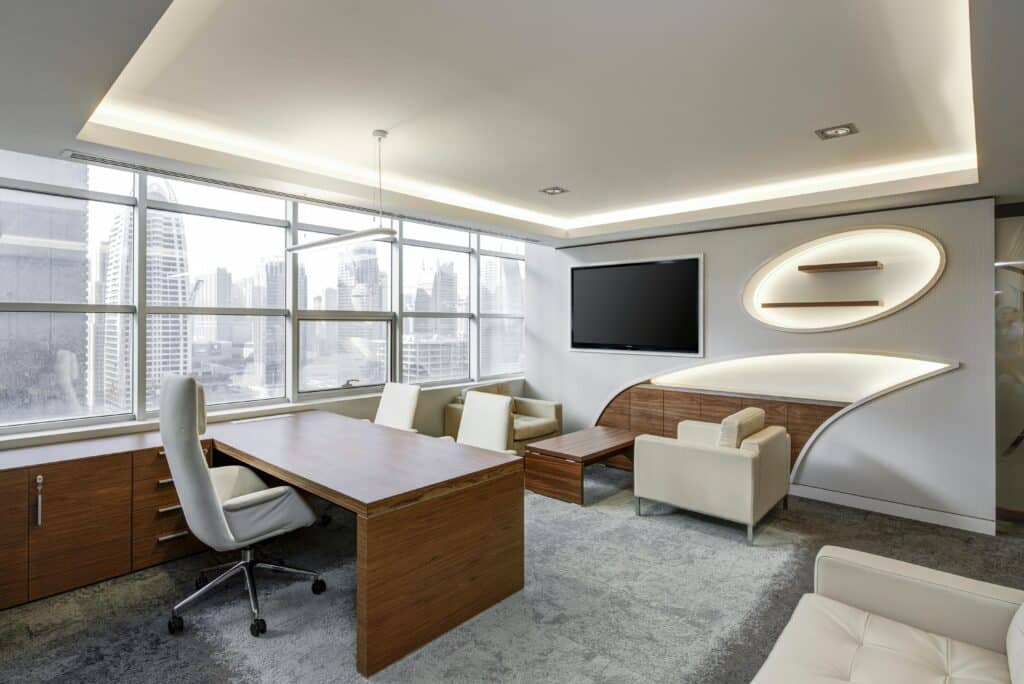
Buying office furniture is one of the biggest decisions a business owner will make.
Do it correctly and your staff will enjoy many years of comfort and productivity. Do it incorrectly and you’ll be swapping chairs and desks for years to come — as your employees gripe about backaches. By following a strategic office furniture purchasing plan you can:
- Boost employee productivity
- Cut down on long-term replacement costs
- Build a workspace that fits how your team actually works
Here’s how to do it…
What’s inside this guide:
- Why Office Furniture Choices Matter More Than Ever
- The Essential Pieces Every Modern Office Needs
- Ergonomics — The One Thing You Can’t Cut Corners On
- Smart Buying Tips That Save Time And Money
Why Office Furniture Choices Matter More Than Ever
Office furniture is no longer just “stuff you sit on” while you work.
Your office furniture is an investment that impacts employee productivity and your company’s image with every customer who walks in your door. Recent shifts in the way we work have changed the office furniture buying process.
Hybrid working, more time spent at desks and a significant increase in wellness priorities have changed the game. The right office furniture helps your business goals and provides your team with a workspace that’s designed around today’s needs—whether that means collaboration spaces, heads-down booths or correct ergonomic setups for employees sitting at a desk for 8+ hours a day. The US office furniture market size was estimated at USD 16.64 billion in 2024 and is expected to grow from 2024 to 2030.
Here’s the thing most business owners don’t realise…
Poor quality furniture drains your finances in ways you don’t always realize. Decreased productivity, absenteeism and frequent replacements can cost you dearly.
Better furniture = Better business outcomes.
The Essential Pieces Every Modern Office Needs
Before you buy anything, you need to know what’s actually essential.
Many companies spend too much on things that don’t matter and not enough on what does. Below is your essential guide to what every office needs these days:
Desks
Desks are at the core of every workstation. Sit-stand desks have become very popular as of late. They allow workers to transition from sitting to standing during the day.
Why? Sitting is bad for everyone’s health. Standing desks alleviate back pain, increase energy, and keep your employees productive during those 3pm sluggish moments.
Office Chairs
This is where many companies fail themselves. Cheap chairs are comfortable in the store, but wreck your employee’s posture in days. An ergonomic chair should have:
- Adjustable lumbar support — to support the lower back
- Adjustable armrests — to prevent shoulder strain
- Seat depth and height adjustment — to fit different body types
- Breathable mesh or quality fabric — to stop overheating
Storage Solutions
Filing cabinets, lockers and shelving units help you keep your office organized. Modular storage is the smart choice since you can reconfigure it when your team expands.
Meeting & Reception Furniture
Even though most meetings will be hybrid moving forward, you still need a conducive space to collaborate and meet with clients. Don’t overlook reception furniture either. First impressions matter for your visitors.
Ergonomics — The One Thing You Can’t Cut Corners On
Pay attention to this section more than any other in this guide.
Ergonomics has evolved from being a “nice to have” to an absolute necessity for any contemporary office. Workers spend countless hours at their desks each day and an improper setup will lead to:
- Lower back pain
- Neck strain
- Repetitive strain injuries
- Lost productivity
Statistically speaking, 58% of US-based corporate purchasers consider ergonomic design one of their top requirements when buying office furniture.
Here’s what good ergonomics actually looks like:
Monitor Position
Have the top of the monitor at eye level. Any higher or lower and your staff will develop neck strain in a matter of weeks.
Chair Setup
Feet planted on the floor. Knees at 90 degrees. Lower back completely supported. Let the chair work, not your employee’s spine.
Desk Height
While seated elbows should be at 90 degrees when typing. The same rule applies while standing.
What’s the best thing about doing ergonomics correctly? It’ll save you money. Healthier employees means less absences and lower turnover.
Smart Buying Tips That Save Time And Money
OK on to application… Below are steps you can take to purchase office furniture WITHOUT going broke.
Plan Your Space First
Know your dimensions before you spend your money. Layout your floor and plan where everything will go. Consider traffic patterns, electrical outlets and windows. Poor planning can make even the nicest furniture feel cluttered.
Set A Realistic Budget
Office furniture can be expensive. Buying the cheapest possible is even more costly.
Rule of thumb? Invest more money in the products your employees use every day (chairs, desks, monitors) and save money on peripherals.
Buy For Flexibility
The future of work is evolving. Global year-over-year orders for modular office furniture jumped 37% in 2024. Rearrange your workspace in days to accommodate team growth with modular furniture.
Don’t Forget Quality Materials
Cheap materials look fine on day one but they wear out fast. Look for:
- Solid wood or quality engineered wood for desks
- Metal frames for stability and longevity
- High-grade mesh or commercial fabric for chairs
- Powder-coated steel for storage
Test Before You Buy
NEVER buy chairs without trying them out first. EVER. Same thing goes for desks — get samples or check out a showroom before ordering wholesale.
Buy From The Right Supplier
This is huge. Work with a supplier that:
- Specialises in commercial office furniture
- Offers warranties on their products
- Provides delivery and assembly services
Final Thoughts
Shopping for office furniture for your modern business shouldn’t just be about aesthetics — it should be about finding furniture that empowers your employees and scales with the growth of your business. Here are some smart office furniture purchases that will save you money:
- Money — because quality furniture lasts years longer than cheap alternatives.
- Time — you won’t be constantly replacing broken chairs and wobbly desks.
- Health costs — ergonomic furniture keeps your team productive and pain-free.
Establishing realistic boundaries by creating a sound purchase plan based on genuine business requirements. Here’s a brief summary:
- Plan your office layout first
- Invest in ergonomic chairs and adjustable desks
- Build in flexibility with modular pieces
- Test before committing to large orders
- Buy from suppliers who back their products
Office furniture is an investment in your team’s future. Choose wisely and you’ll have a workspace that works just as hard as you do.