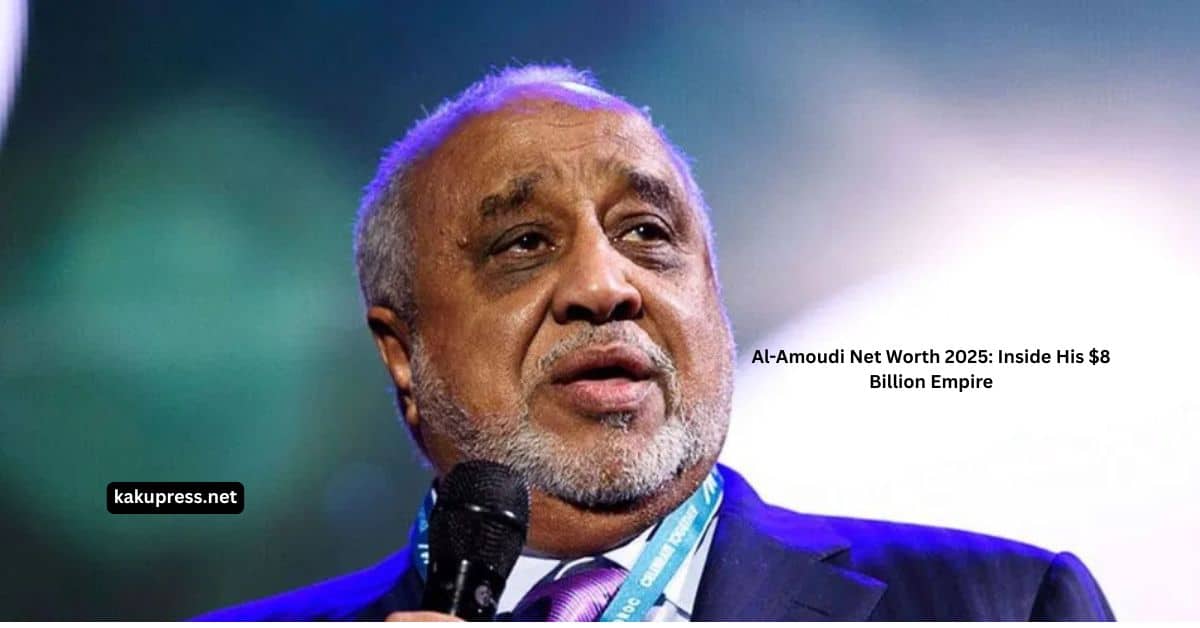
Mohammed Al-Amoudi is one of the richest men in Africa. He is also one of the most talked-about. His net worth today is $8 billion. That puts him among the top billionaires in both Saudi Arabia and Africa.
But how did he get here? And what almost took it all away?
Let’s break it down — simply and clearly.
Al-Amoudi At a Glance
| Detail | Info |
|---|---|
| Full Name | Mohammed Hussein Al-Amoudi |
| Net Worth (2025) | $8 Billion |
| Date of Birth | July 21, 1946 |
| Age | 79 years old |
| Birthplace | Dessie, Ethiopia |
| Nationalities | Saudi Arabian, Ethiopian |
| Main Business Group | Midroc Group |
| Key Asset | Preem (Sweden’s largest oil refiner) |
| Peak Net Worth | $12+ Billion |
Who Is Al-Amoudi? A Quick Bio
Mohammed Al-Amoudi was born in 1946 in Ethiopia. His father was Yemeni. His mother was Ethiopian. He grew up in the Wollo region of Ethiopia.
At age 19, he moved to Saudi Arabia. He got Saudi citizenship. Then he started building a business from scratch.
He studied at Addis Ababa University. But he didn’t finish. Business called him early.
He worked in Saudi Arabia during its oil boom years — the 1970s and 1980s. He won big construction deals from the Saudi government. That’s where the money started flowing.
How Did Al-Amoudi Make His Money?
Al-Amoudi didn’t build his fortune from one source. He spread it across five key industries:
- Construction and real estate (Saudi Arabia, early career)
- Oil refining (Sweden and Morocco)
- Gold mining (Ethiopia)
- Agriculture and farming (Ethiopia)
- Infrastructure and hotels (global)
Let’s look at each one.
The Midroc Group: His Business Engine
In the early 1980s, Al-Amoudi set up Midroc. The name stands for “Mohammed International Development Research and Organization Companies.”
Midroc became his main tool. Through it, he owns businesses in many countries.
In 1988, Midroc won a huge deal. They built Saudi Arabia’s underground oil storage complex. It was one of the biggest projects of its kind. It made Al-Amoudi famous in business circles across the Middle East.
By the mid-1990s, Midroc was growing fast. Al-Amoudi began to invest beyond Saudi Arabia — especially in Ethiopia.
His Oil Empire: From Sweden to Morocco
Al-Amoudi made a bold move in the 1990s. He went into oil refining through a holding company called Corral Petroleum.
Preem (Sweden)
In 1994, he bought a Swedish oil company called OKP. He renamed it Preem Petroleum. Today, Preem is Sweden’s largest oil refiner. It handles more than 80% of Sweden’s total oil refining capacity.
Preem is his biggest European asset. It is worth several billion dollars on its own.
He also bought Svenska Petroleum at the same time. That gave him even more reach in the Nordic oil market.
Morocco (Samir Refinery)
In 1999, he took control of Morocco’s two biggest oil refineries. He merged them to create Samir. For years, Samir was a major African oil asset.
But Samir later ran into heavy debt. It collapsed. That was a big loss. But Al-Amoudi’s other assets kept him wealthy.
Naft Services (Saudi Arabia)
In Saudi Arabia, he owns Naft Services, a gas station network. It gives him steady cash flow from fuel retail.
His Ethiopian Empire: Gold, Coffee, and Land
Ethiopia is where Al-Amoudi has the deepest roots — and the most assets.
He is the single largest foreign investor in Ethiopia. His holdings there include:
- Gold mining — He held a 98% stake in the Lega Dembi gold mine, which for years was Ethiopia’s largest gold mine
- Coffee farms — Ethiopia is famous for coffee, and Al-Amoudi has large farms there
- Rice farms — He holds a 60-year farming concession on 10,000 hectares in Gambella province
- Steel production — Metal and manufacturing plants
- Real estate and hotels — Properties across Addis Ababa
- Infrastructure — Roads, construction projects
The Gold Mine Controversy
The Lega Dembi mine brought him both wealth and criticism. In 2018, the mine was shut down after local protests. Residents said it caused pollution and health issues. The Ethiopian government stepped in.
Later, Al-Amoudi’s stake in the mine changed hands as part of deals tied to his detention (more on that below). This change cost him an estimated $4 billion in net worth by 2025.
Land and Farming Disputes
His large farming projects in Ethiopia drew criticism from advocacy groups. The Oakland Institute accused him of land grabs that displaced local people.
The Ethiopian government said any relocations were done by choice. Al-Amoudi denied wrongdoing. But the controversy followed him for years.
His Swedish Real Estate: Granitor
Beyond oil, Al-Amoudi holds a minority stake in Granitor. Granitor is a Swedish company that owns infrastructure and property.
This adds another layer to his European wealth base. It also shows how he has spread risk across many asset types.
Net Worth Timeline: How His Wealth Changed?
Al-Amoudi’s fortune did not always sit at $8 billion. It has moved up and down over the years.
| Year | Estimated Net Worth | Key Event |
|---|---|---|
| Early 2000s | ~$5–7 billion | Preem and Ethiopian assets growing |
| 2010s (peak) | $12+ billion | Gold mine producing, Preem at full value |
| 2017 | ~$10 billion | Detained in Saudi Arabia (November) |
| 2019 | ~$8–9 billion | Released from detention, assets reduced |
| 2025 | $8 billion | Gold mine stake changes, net worth drops from peak |
His peak wealth was over $12 billion. The detention in 2017 and the changes to his Ethiopian gold holdings cost him roughly $4 billion by 2025 estimates.
The Saudi Detention: What Really Happened?
On November 4, 2017, Al-Amoudi was arrested in Saudi Arabia. He was held at the Ritz-Carlton hotel in Riyadh. This was part of Crown Prince Mohammed bin Salman’s anti-corruption campaign.
It shocked the world. He was one of the most powerful foreign investors in Saudi Arabia.
More than 200 business leaders and princes were detained at the same time. The Saudi government said it was fighting corruption.
Al-Amoudi stayed detained for over 14 months. He was released in January 2019.
No formal charges were ever made public. No trial took place. Saudi authorities gave no reason for either the arrest or the release.
What Happened to His Businesses?
Here’s the key part: his businesses kept running. Preem in Sweden stayed open. His Ethiopian companies kept working.
Ethiopia’s then-Prime Minister Abiy Ahmed personally asked for his release.
Al-Amoudi is believed to have reached a financial settlement with the Saudi government to secure his freedom — a common outcome among those detained in the crackdown. The exact terms were never disclosed.
Legal Fights: When He Was Falsely Accused?
Being rich makes you a target. Al-Amoudi has fought two major legal battles tied to false claims.
2005: Terrorism Allegation (France)
French analyst Jean Charles Brisard accused Al-Amoudi of funding terrorism. Al-Amoudi sued. The court sided with him. Brisard had to give a public apology and admit the claims were false.
2011: Defamation Case (UK)
A website called Ethiopian Review, run by Elias Kifle, published terrorism claims against him again.
Al-Amoudi sued in the UK. He won. The court awarded him $282,000 in damages.
These wins show that many claims against him were not backed by evidence.
How Al-Amoudi Compares to Other African Billionaires?
Where does Al-Amoudi sit among Africa’s wealthiest people?
| Name | Net Worth (2025 est.) | Country | Main Wealth Source |
|---|---|---|---|
| Aliko Dangote | ~$14 billion | Nigeria | Cement, sugar, oil |
| Johann Rupert | ~$11 billion | South Africa | Luxury goods (Richemont) |
| Nicky Oppenheimer | ~$8 billion | South Africa | Diamonds |
| Mohammed Al-Amoudi | ~$8 billion | Ethiopia/Saudi | Oil, gold, farming |
| Mike Adenuga | ~$7 billion | Nigeria | Telecom, oil |
Al-Amoudi sits in the top 5 richest people in Africa. He is also one of the richest men in Saudi Arabia and Sweden.
What Makes Al-Amoudi Different From Other Billionaires?
Most billionaires build wealth in one country. Al-Amoudi built his across three continents — Africa, Asia, and Europe.
He also bridged two worlds. He grew up in Ethiopia. He built his base in Saudi Arabia. He invested in Europe. Very few people have done all three at once.
His wealth is also spread across very different industries:
- Energy (Preem, Naft)
- Mining (gold in Ethiopia)
- Agriculture (coffee, rice)
- Real estate and hotels
- Infrastructure
This spread is what helped him survive the 2017 detention. No single blow could take everything.
Al-Amoudi’s Philanthropy and Legacy
Al-Amoudi has given to causes in both Ethiopia and Saudi Arabia.
- He has funded hospitals and schools in Ethiopia
- He has donated to Islamic causes and mosques
- He has provided jobs for thousands through his Ethiopian businesses
His impact on Ethiopia’s economy is massive. Whether you like him or not, his investments created jobs, built roads, and brought money into a country that needed it.
Key Facts You Should Know
- Al-Amoudi was once one of the richest 50 people in the world
- He is the largest foreign investor in Ethiopia’s history
- His company Preem refines over 80% of Sweden’s oil
- He won two major defamation lawsuits in Europe
- He was detained for 14+ months without formal charges
- His net worth dropped from $12 billion to $8 billion between his peak and 2025
- He has lived across Ethiopia, Saudi Arabia, and Sweden
Frequently Asked Questions (FAQs)
What is Al-Amoudi’s net worth in 2025?
Al-Amoudi’s net worth is estimated at $8 billion in 2025. This is down from his peak of over $12 billion, mainly due to changes in his Ethiopian gold holdings.
What is Al-Amoudi’s full name?
His full name is Mohammed Hussein Al-Amoudi. He is sometimes spelled “Al Amoudi,” “Alamudin,” or “Al-Amoudi.”
Is Al-Amoudi Ethiopian or Saudi?
He is both. He was born in Ethiopia and holds Ethiopian roots. He later moved to Saudi Arabia and became a Saudi citizen. He holds dual identity across both countries.
How did Al-Amoudi make his money?
He started in construction in Saudi Arabia during the oil boom. He then moved into oil refining (Sweden and Morocco), gold mining (Ethiopia), and agriculture. His main holding company is Midroc.
What is Midroc?
Midroc stands for “Mohammed International Development Research and Organization Companies.” It is Al-Amoudi’s main business group. It controls his assets in construction, energy, mining, and farming across multiple countries.
Why was Al-Amoudi arrested in 2017?
He was detained in Saudi Arabia on November 4, 2017, as part of Crown Prince Mohammed bin Salman’s anti-corruption sweep. Over 200 people were detained. He was held for 14+ months and released in January 2019. No charges were ever made public.
What is Preem and why does it matter?
Preem is Sweden’s largest oil refining company. Al-Amoudi bought it in 1994 and renamed it from OKP. It handles more than 80% of Sweden’s oil refining. It is one of his most valuable assets.
What happened to Al-Amoudi’s gold mine in Ethiopia?
He held a 98% stake in the Lega Dembi gold mine — Ethiopia’s largest. The mine was shut in 2018 after local protests over pollution. His stake later changed as part of dealings related to his Saudi detention. This loss cut his net worth by roughly $4 billion from peak levels.
Has Al-Amoudi been involved in lawsuits?
Yes. He won two major defamation cases — one in France in 2005 and one in the UK in 2011. Both cases involved false claims that he funded terrorism. He won both.
What is Al-Amoudi’s age?
He was born on July 21, 1946. That makes him 79 years old in 2025.
Is Al-Amoudi still active in business?
Yes. His companies — including Preem, Naft Services, and Midroc — continue to operate. He remains one of the most active business figures tied to Ethiopia and Sweden.
Final Thoughts
Al-Amoudi’s story is unlike most billionaires. He didn’t inherit a fortune. He didn’t ride one big tech wave. He built his wealth step by step — from Saudi construction deals to Swedish oil refineries to Ethiopian gold mines.
He’s faced false accusations. He’s survived arrest and detention. He’s lost billions from his peak. And yet, at 79, he remains an $8 billion man with businesses on three continents.