
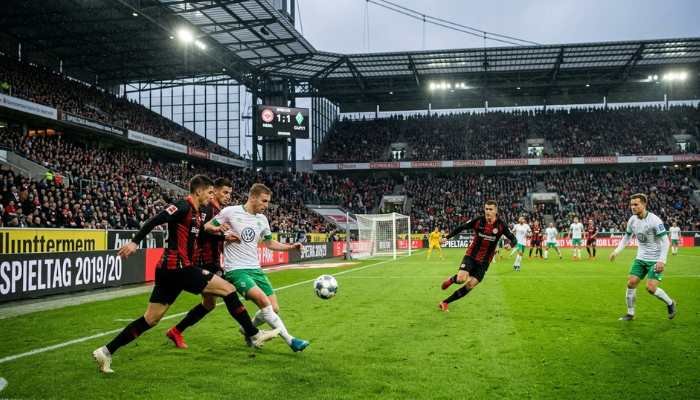
Pressing defines the Bundesliga’s tempo as much as goals do. During the 2019/20 season, several teams turned their high-press approach into sustained attacking pressure, producing frequent shot opportunities and corner counts. Understanding how pressing intensity translates into offensive output offers valuable analytical perspective for interpreting tactical risk, game dynamics, and probability trends in goal-related markets.
What Pressing Really Creates Beyond Possession Recovery
High-press systems are not only defensive actions but also catalysts for immediate attack triggers. They aim to recover the ball in advanced zones, generating short transition distances and catching opponents unbalanced. In statistical terms, teams with top pressing metrics tend to lead in expected goals from open play, forward passes in the final third, and corners earned from deflected shots or forced clearances.
Identifying Bundesliga 2019/20’s Most Impactful Pressing Teams
Evaluating pressing efficiency involves examining passes per defensive action (PPDA), final-third recoveries, and sequence starts after ball recovery. Data from the season highlighted teams such as RB Leipzig, Bayer Leverkusen, and Borussia Dortmund as consistent leaders across these dimensions. Their combined aggression and vertical tempo yielded both territory dominance and set-piece volume.
| Team | PPDA | Shots per Game | Corners per Game | Pressing Zone | Tactical Tendency |
| RB Leipzig | 8.1 | 15.9 | 6.3 | High third | Central traps leading to vertical breaks |
| Bayer Leverkusen | 9.3 | 14.5 | 5.8 | Mid-high | Winger-led counter presses |
| Borussia Dortmund | 10.0 | 16.4 | 6.1 | Variable | Press triggers based on opponent setup |
These indicators establish the correlation between pressing mechanics and offensive persistence. Each of these teams generated sustained territorial advantages that naturally inflated corner counts and shot frequency without relying on possession volume alone.
Tactical Dynamics That Link Pressing and Corners
Most corners in a pressing system arise from blocked shots, disrupted clearances, or forced long balls reset into the attacking zone. When a team presses effectively, opponents lack time for clean exits, which increases secondary attacking sequences. Quantitatively, more than 60% of Leipzig’s corner situations in 2019/20 originated within fifteen seconds of a regained ball, emphasizing how structure converts pressure into measurable output.
Situational Value of Pressing-Oriented Teams in Market Analysis
For analytically minded observers, pressing teams present dual dimensions: scoring potential and sustained volume probabilities. In pre-match consideration, heavy-pressing sides often distort total shot or corner line pricing. Recognizing this link allows bettors to adjust expectations for match tempo rather than assuming chance randomness or set-piece variance. The predictability of pressing behavior is more reliable than finishing variance in forecasting possession-based dominance.
Integrating Observed Metrics into Strategic Frameworks
When applying quantitative betting methods, analysts focus less on raw outcomes and more on predictive structure. Within that evaluative approach, advanced data interpretation becomes more actionable through multi-source environments. In certain analytical ecosystems, ufa168 สล็อต functions as a conduit between tactical understanding and structured betting analytics, emphasizing objective data interpretation over emotion-led betting. Analytical bettors incorporating pressing-related data into probability frameworks often find consistent marginal advantages when markets misprice intensity-driven metrics.
Limitations and Conditional Pressing Scenarios
Pressing efficiency declines significantly under fatigue or fixture congestion. Bundesliga’s condensed periods demonstrated that high-energy tactics risk late-game exposure, where counter-attacks inflate opposition corners. Teams without rotational depth saw diminished output beyond 70 minutes per game. Consequently, tactical sustainability—not peak intensity—defined which sides maintained efficiency across the campaign.
Comparison Between Compact and Aggressive Systems
Compact mid-block systems create fewer corners but protect spacing better, while high-line pressing delivers more chaos and shot volume. Teams transitioning between these extremes—Leipzig under Nagelsmann being the key example—combined structural discipline with adaptable press-triggers, producing balance across xG creation and defensive control.
Contextual Interpretation in Broader Analytical Models
When viewing pressing-driven metrics across multiple sports contexts, analysts notice recurring probability mechanisms. Within gaming-based predictive frameworks, variance management reflects how short-term intensity correlates with steady output rates. Comparable observations appear within casino online analytics, where volume-based data cycles eventually mirror controlled expectation values after large event samples. This conceptual connection reinforces the statistical nature of prediction: consistency over singular outcomes.
Applying Tactical Observation to Betting Timing
Understanding which high-pressing teams sustain momentum for full durations informs timing-based selection. Early-match intervals favor sides with immediate tactical triggers, while later phases may shift toward possession teams exploiting fatigue. Observing live energy levels against press resistance often proves more valuable than studying pre-game models alone when identifying intraday value windows.
Summary
Bundesliga 2019/20 exemplified how pressing intensity translates into measurable offensive pressure—especially through chance creation and corner accumulation. Teams mastering situational pressing not only controlled territorial phases but also shaped cumulative output averages that influenced both match tempo and betting probabilities. For tactically driven analysts, quantifying pressing effects offers a clearer lens for assessing momentum shifts, value discrepancies, and sustained attacking predictability.