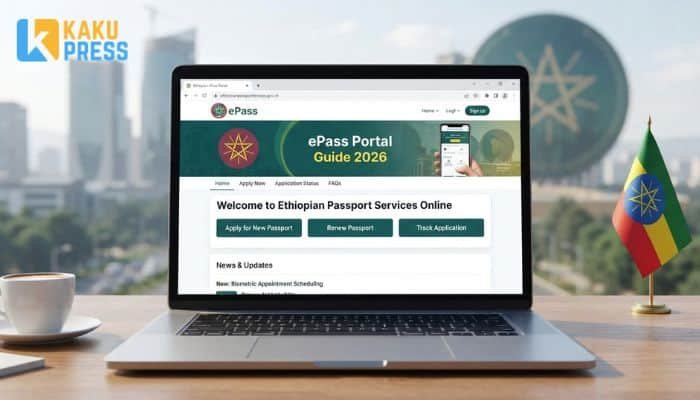

If you want to visit Ethiopia in 2026, the best way to get your permit is through the official e-visa website. You no longer need to wait in long lines at an embassy or send your passport through the mail. Most travelers apply online and get their approval letter in just three to five days.
The process is very simple. You just fill out a form, upload a recent passport photo, and pay the fee with your card. It is a smart move to apply at least a week before your trip to make sure everything is ready.
Visa Types, Costs, and Passport Rules
There are two main choices for tourists: a 30-day visa or a 90-day visa. As of early 2026, the 30-day single-entry visa costs about $62, while the 90-day version is around $152. Before you start, check that your passport is valid for at least six months from the day you plan to arrive. One key rule to remember is that an e-visa is only for entry at Addis Ababa Bole International Airport. If you plan to enter Ethiopia by land from a neighbor country, you must still get a paper visa from an embassy first.

1. Tourist Visa
A tourist visa is meant for travelers who want to visit a country for leisure, sightseeing, or visiting friends and family. This visa generally has a short validity period, ranging from a few weeks to several months, depending on the country. Tourist visas do not permit employment or long-term stays.
Applying for a tourist visa usually requires proof of financial stability, a return ticket, and accommodation details. Some countries may also require travel insurance or vaccination records. Many nations offer e-visas or visa-on-arrival options to simplify the process.
2. Work Visa
A work visa is issued to individuals who have secured employment in a foreign country. This type of visa typically requires sponsorship from an employer and approval from the host country’s labor authorities. The validity of a work visa varies, often depending on the employment contract and local regulations.
Applicants for work visas may need to submit employment contracts, educational qualifications, and health certificates. Some countries impose strict quotas and eligibility criteria for foreign workers. In many cases, work visas can be extended or converted into permanent residency over time.
3. Student Visa
Students who wish to pursue education in another country need a student visa. This visa is generally valid for the duration of the academic program and may include provisions for part-time work. Student visas often require proof of admission to an accredited institution, financial support documentation, and health insurance.
Many countries allow student visa holders to work a limited number of hours per week, enabling them to support themselves while studying. Upon completing their studies, some students may be eligible for work permits or residency extensions, depending on local policies.
4. Business Visa
A business visa is issued to individuals traveling for professional purposes such as meetings, conferences, or negotiations. Unlike work visas, business visas do not permit employment or long-term stays. They are typically granted for short periods, often ranging from a few days to several months.
Applicants may need to provide invitation letters from host companies, proof of business ties, and travel itineraries. Some countries offer multiple-entry business visas, allowing frequent travelers to enter and exit without reapplying each time.
5. Transit Visa
A transit visa is required for travelers passing through a country on their way to another destination. This type of visa is generally valid for a short duration, such as 24 to 72 hours, and does not allow extended stays or activities beyond transit purposes.
Transit visas are often necessary for passengers with layovers in certain countries. In some cases, travelers may qualify for visa-free transit if they remain within a designated airport area and depart within a specified time frame.
How to Apply for a Visa
Applying for a visa involves several steps, which may vary by country. Below is a general guide to the visa application process:
- Check Visa Requirements – Research the visa rules for your destination country by visiting the official embassy website.
- Fill Out the Application – Complete the visa application form with accurate personal and travel details.
- Submit Documents – Provide necessary documents such as a valid passport, recent photographs, financial proof, and an invitation letter (if applicable).
- Pay the Fee – Visa fees vary depending on the type and processing time. Payments are usually non-refundable.
- Attend an Interview – Some visa categories require an in-person interview at the embassy or consulate.
- Wait for Approval – Visa processing times differ; some applications take days, while others may take weeks or months.
Common Visa Rejections

Visa applications can be denied for several reasons. Understanding these common rejection causes can help applicants avoid mistakes:
- Incomplete Documents – Missing paperwork, such as financial proof or a valid passport, may result in rejection.
- Incorrect Information – Providing false or inconsistent details can lead to a ban from future applications.
- Insufficient Funds – Some visas require applicants to demonstrate financial stability for their stay.
- Security Concerns – Individuals with past legal issues or travel bans may face visa denial.
- Weak Ties to Home Country – If an applicant cannot prove strong ties to their home country, officials may suspect an intention to overstay.
Tips for a Smooth Visa Process

To ensure a hassle-free visa application process, consider the following tips:
- Apply Early – Visa processing takes time, so apply well in advance of your travel date.
- Be Honest – Provide truthful and complete information on your application.
- Organize Documents – Keep all required documents ready and double-check for accuracy.
- Verify Expiry Dates – Ensure your passport and supporting documents are valid for the required duration.
- Follow Instructions Carefully – Adhere to the guidelines provided by the embassy or consulate.
Conclusion
A visa is a crucial requirement for international travel, determining whether a person can enter and stay in a country legally. By understanding the different types of visas, their requirements, and the application process, travelers can avoid common pitfalls and ensure a smooth journey. Always check with official sources for the most up-to-date information and guidelines before applying.
FAQs
1. How long does a visa take to process?
Processing times vary based on the visa type and country, ranging from a few days to several months.
2. Can I work on a tourist visa?
No, a tourist visa does not permit employment. You must obtain a work visa for job-related activities.
3. What happens if my visa is denied?
If your visa is rejected, you may reapply with corrected information or appeal the decision, depending on the country’s regulations.
4. Is a visa required for every country?
No, some countries allow visa-free travel for certain nationalities, but others require a visa for entry.
5. Can I extend my visa?
Some visas allow extensions. Check with the local immigration office for specific policies and procedures.