
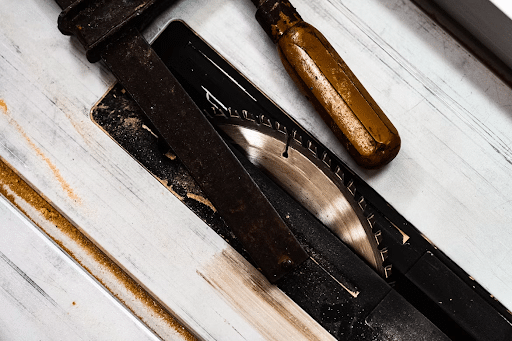
When a blade goes dull, most workshop owners do the exact same thing.
They bin it and order a new one.
It sounds like taking the lazy way out. It sounds cheap. It sounds like the intelligent thing to do…
However, here’s the reality: buying replacement blades is one of the most costly choices you can make for your shop. Every time you throw away a dull blade and stick on a new one, you are literally wasting money in the metal recycling bin.
And it adds up a lot faster than you think.
This article will show you precisely why every blade change bleeds shops dry. You will also discover how the right tool sharpening service can turn your costs upside down.
Let’s jump in.
Here’s What’s Inside:
- The Real Cost Of Replacing Blades
- Why A Tool Sharpening Service Beats Buying New
- When Replacement Actually Makes Sense
- How To Build A Smarter Workshop Blade Strategy
The Real Cost Of Replacing Blades
The price tag on a new blade is just the start.
Repeated blade replacement means you are not only paying for that new tool. You are also paying for:
- Lost workshop hours
- Delivery and lead times
- Higher waste output
- More frequent reorders
And the biggest hidden cost? Downtime.
Hour by hour your idle machine loses you actual dollars. Industry statistics claim that unplanned downtime costs manufacturers $50 billion a year. Even at a small shop level, the hour you spend waiting on a new blade is an hour you can’t charge out.
A far better option is to employ the services of a professional tool sharpening company. Rather than replacing blades when they dull, you extend the lifespan of your current blades exponentially by regrinding them. A quality tool sharpening company can return your blades to like-new condition for only a fraction of what new blades would cost. That equates to lower operating costs, less waste, and a productive workshop while your competitors scramble for new blade deliveries.
Simple, right?
But it gets better…
Why A Tool Sharpening Service Beats Buying New
Here’s a breakdown of the numbers.
An industrial blade can range from £40-£400+ pounds to buy depending on quality and size. Have that blade professionally sharpened? Its usually only a fraction of the price.
That means, for the cost of one new blade you can sharpen that blade many times.
Here’s the maths in action:
- New blade cost: £150
- Sharpening cost: £25
- Sharpenings before retirement: 4-5x
That could be 5x the lifetime out of the exact same blade. And you only ever pay that large initial cost one time.
But it is not just about money…
A newly sharpened blade can work better than a new blade. How can this be? When sharpened, the geometry can be optimized for your particular cutting application. A new blade is a mass-produced item. A sharpened blade is customized to fit the work your shop really does.
You also get:
- Less waste — fewer blades dumped in landfill
- Better cuts — cleaner edges with less material damage
- Longer machine life — sharp blades put far less strain on your motors
- Predictable costs — you can budget for sharpening instead of guessing
The benefits stack up fast.
When Replacement Actually Makes Sense
Here’s the thing…
Sharpening isn’t always the solution. Sometimes buying a new blade is exactly the right thing to do.
You should replace a blade when:
- The carbide teeth are broken or chipped beyond repair
- The body of the blade is warped or cracked
- The blade has been sharpened so often the teeth are worn down
- The blade was cheap and low-quality to begin with (under £20)
For everything else, sharpening wins.
Most quality blades will sharpen 3-5x before they are ready to retire. That is a significant cost savings over the life of your tooling. If you aren’t including sharpening in your blade strategy, you are leaving money on the table.
How To Build A Smarter Workshop Blade Strategy
Fed up of buying new blades each month? Learn how to do it right.
Track Every Blade
Start by knowing what you actually have. Log every blade in your workshop with:
- The date it was bought
- The date it was last sharpened
- How many cuts it has done
So now you know what blades you should keep rotating and what blades you should hang up.
Set Up A Sharpening Schedule
Don’t let a blade get totally dull before you sharpen it. By the time you realize it, your cut quality is compromised, your machine is laboring, and your work is suffering. Establish a routine sharpening schedule based on usage. The majority of shops should have their blades professionally serviced every few weeks of heavy use.
Find A Reliable Sharpening Partner
Not every sharpening service is the same. Look for a provider that:
- Handles all of your blade types
- Uses precision grinding equipment
- Offers a quick turnaround
- Has years of proven experience
A quality sharpening partner is an expense that gets added to your workshop’s overhead in the best possible way. Think about how equipment breakdown is responsible for the majority of workshop headaches — 42% of unplanned downtime is caused by equipment failure and dull or damaged blades are at the epicenter of that problem.
Stock A Few Spares
During the time your blades are away being sharpened you still need to be cutting. Always have a few spare blades on hand so you have no downtime while blades are being serviced. This is what most shops fail to do.
Bringing It All Together
Replacing blades really is the most expensive decision your workshop can make…
It’s not that new blades are expensive by themselves. It’s that when you factor in downtime, waste, and cost of new tooling repeatedly over the course of a year, it really adds up.
A simple shift to a regular tool sharpening service can:
- Cut your blade costs by 50-75%
- Reduce workshop downtime
- Improve your cut quality
- Extend the working life of every single blade you own
It really is one of the easiest wins for any workshop.
The next time a blade goes dull, don’t reach for the order form…
Reach for the sharpener.